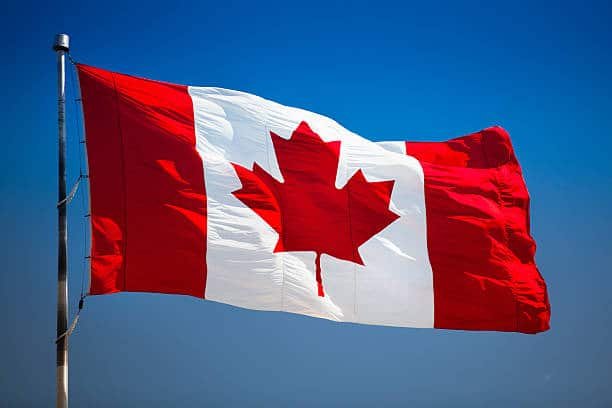
Canada, the world’s second-largest country, has a long, layered, and multicultural history shaped by Indigenous civilizations, European exploration, colonial competition, confederation, and modern nation-building. Its story stretches back thousands of years—long before the arrival of Europeans—and continues to evolve as its strengthens its identity as a democratic, inclusive, and diverse nation. This blog explores Canada’s remarkable historical journey in detail.
—
Indigenous Peoples: The First Inhabitants of Canada
Long before it was a country, diverse Indigenous cultures flourished across the land. Archaeological evidence shows that Indigenous peoples have lived in Canada for at least 12,000 years.
Some major Indigenous groups include:
• First Nations – Occupied regions from the Pacific Coast to the Atlantic. Notable nations included the Haida, Cree, Iroquois, Ojibwe, Mi’kmaq, Blackfoot, and many others.
• Inuit – Lived in the Arctic regions, adapting exceptionally to harsh climates.
• Métis – Emerged later through the intermarriage of European fur traders and First Nations women, forming a unique culture.
Indigenous people developed complex trade networks, advanced agricultural systems, sophisticated governance structures, and rich spiritual traditions. Their contributions deeply influenced its cultural and political development.
—
European Exploration and the Beginning of Colonization (1000–1600)
Norse Arrival (Around 1000 AD)
The first known Europeans to reach Canadian soil were Norse explorers led by Leif Erikson, who established a settlement at L’Anse aux Meadows in present-day Newfoundland. This settlement was short-lived, but it marks the earliest European presence in North America.
Age of Exploration
In the late 15th and early 16th centuries, European interest in the region grew:
• John Cabot (1497) – Sailed under the English flag, exploring the East Coast.
• Jacques Cartier (1534–1542) – A French explorer who claimed the land for France and interacted with the Iroquois Confederacy.
Cartier’s voyages laid the foundation for French claims in North America.
—
New France: The French Colonial Era (1608–1763)
The real beginning of European settlement came with Samuel de Champlain, who founded Quebec City in 1608. This marked the birth of New France.
Key Features of New France
• Fur Trade Economy – The beaver fur trade became the backbone of the colony’s economy.
• Missionary Work – French Jesuits tried to convert Indigenous peoples, leaving a strong cultural influence.
• Expansion – The French explored vast territories, including the Great Lakes and Mississippi River.
Conflicts with the British
Throughout the 17th and 18th centuries, Britain and France fought repeatedly for control of North America. The decisive moment came during the Seven Years’ War (1756–1763).
—
British Conquest and Control (1763–1867)
The Treaty of Paris (1763) ended French rule in Canada. Britain now controlled most of North America.
Key Developments Under British Rule
• Quebec Act (1774) – Allowed French Canadians to maintain their language, religion, and legal system. This was crucial in shaping Canada’s bilingual identity.
• American Revolution (1775–1783) – Thousands of Loyalists fled from the newly formed United States into Canada, changing demographics in regions like Ontario and Nova Scotia.
• Formation of Upper and Lower Canada (1791) – To manage growing populations and cultural differences, Britain split the colony.
Upper Canada (Ontario): English-speaking
Lower Canada (Quebec): French-speaking
Steps Toward Self-Government
• Rebellions of 1837–38 – Uprisings in both Canadas demanded more democratic governance.
•Durham Report (1839) – Recommended responsible government and the union of the two Canadas.
• Act of Union (1841) – Created the Province of Canada.
By the mid-19th century, the idea of forming a larger, united federation began to grow.
—
Confederation: The Birth of Canada (1867)
On July 1, 1867, the Dominion of Canada was formed under the British North America Act. The first four provinces were:
1. Ontario
2. Quebec
3. New Brunswick
4. Nova Scotia
Canada now had control over its internal affairs while remaining part of the British Empire.
Key Leaders of Confederation
• Sir John A. Macdonald – Canada’s first Prime Minister
• George-Étienne Cartier
• George Brown
These leaders laid the foundation of political unity and expansion.
—
Expansion Across the Continent (1867–1914)
After confederation, Canada rapidly expanded westward and northward.
Major Events
• Manitoba joined in 1870
• British Columbia joined in 1871 after Canada promised to build a railway to connect it to the East.
• Construction of the Canadian Pacific Railway (completed in 1885) united the country physically and economically.
• Saskatchewan and Alberta became provinces in 1905
This period also saw challenges, such as the North-West Rebellion (1885) led by Métis leader Louis Riel, reflecting tensions between Indigenous communities and the expanding government.
—
World Wars and Emerging Independence (1914–1945)
Canada played a major role in both world wars.
World War I (1914–1918)
• The Battle of Vimy Ridge (1917) became a symbol of Canadian identity.
• Canada gained global recognition and signed the Treaty of Versailles independently of Britain.
World War II (1939–1945)
• Canada was a key Allied force in Europe and the Atlantic.
• Post-war, Canada became more influential internationally.
Independence Grow
• Statute of Westminster (1931) granted full legislative autonomy.
• Canada now had near-complete control over its laws.
—
Modern Canada: A Multicultural Nation (1945–Present)
After 1945, Canada transitioned into the modern, diverse nation it is today.
Key Milestones
• 1950s–70s Immigration Expansion – Welcomed millions from Asia, Europe, Africa, and the Caribbean.
• 1965 – Adoption of the Maple Leaf Flag, now a global symbol.
• 1969 – Official Languages Act recognized English and French as equal.
• 1982 – Canada Act (Constitution Act) patriated the constitution from Britain and introduced the Canadian Charter of Rights and Freedoms.
Indigenous Rights Movement
In recent decades, Canada has focused on:
• Truth and Reconciliation
• Land rights
• Cultural preservation
• Residential school acknowledgment
—
Conclusion
The history of Canada is a story of ancient Indigenous civilizations, European rivalry, gradual democratic evolution, and the building of a multicultural society. From colonization to confederation and from war efforts to constitutional independence, Canada’s journey reflects resilience, unity, and diversity. Today, Canada stands as a peaceful, inclusive, and prosperous nation—built on centuries of cultural exchange, challenges, and progress.