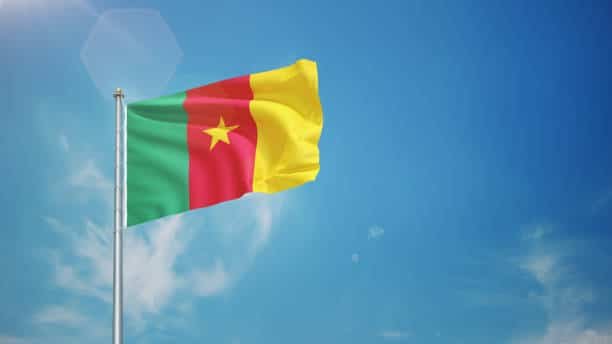
Cameroon, located in Central Africa and often referred to as “Africa in Miniature,” is a nation rich in cultural diversity, geographic variety, and a long, complex history. Its story stretches from ancient civilizations and powerful kingdoms to European colonization, independence, and the construction of a modern, multicultural republic. Understanding Cameroon’s past gives us a deeper appreciation for how this vibrant country became what it is today.
—
Early Civilizations and Ancient Kingdoms
Long before European contact, Cameroon was home to several ancient communities and ethnic groups. Archaeological evidence suggests that humans lived in this region as early as 50,000 years ago. Over centuries, many groups migrated into the area—from the Sahel, Congo Basin, and even the Nile Valley—contributing to Cameroon’s ethnic diversity.
One of the most impactful groups were the Bantu people, who settled in the southern and eastern parts of Cameroon. They brought farming, iron-working technology, and organized societies. Their movements shaped the foundation of many modern Cameroonian ethnic groups.
The Rise of Kingdoms
By the 8th to 12th centuries, several powerful states and kingdoms emerged:
1. The Sao Civilization
Centered around Lake Chad, the Sao people were known for their advanced iron tools, pottery, and defensive structures. They interacted with Arab traders and played a major role in regional commerce.
2. The Kanem-Bornu Empire
This powerful empire extended its influence into northern Cameroon. It dominated trans-Saharan trade, connecting Central Africa with North Africa. Influence from Islam also spread through trade interactions.
3. The Grassfields Kingdoms
In western Cameroon, the Bamileke, Bamum, and other groups formed sophisticated kingdoms. They had hierarchical leadership systems, artistic traditions, and strong economic networks.
One of the most famous rulers was King Njoya of the Bamum Kingdom, who created a writing system called Shümom and introduced architectural and educational reforms. His innovations remain a proud part of Cameroon’s heritage.
—
Arrival of Europeans and the Slave Trade
The first Europeans to arrive were the Portuguese in the 15th century. They were fascinated by the abundance of prawns in the Wouri River and named it Rio dos Camarões (“River of Shrimps”), which eventually evolved into “Cameroon.”
Over the next several centuries, European presence remained limited mostly to coastal trade. The region became part of the trans-Atlantic slave trade, with many local communities affected by raids, warfare, and forced migration.
Portuguese influence was later replaced by other European powers, including the Dutch, British, and Germans, especially as coastal trade became more profitable.
—
German Colonization (1884–1916)
Germany officially claimed Cameroon in 1884, naming it Kamerun and establishing it as a colony. German rule brought major changes:
• Large-scale plantation agriculture (cocoa, bananas, rubber)
• Infrastructure improvements (railways, ports, roads)
• Administrative centralization
However, German rule was also harsh and often exploitative. Many communities resisted colonial authority, leading to uprisings and military action.
During World War I, Germany lost control of Kamerun to Britain and France.
—
French and British Mandates (1916–1960)
After Germany’s defeat, the League of Nations divided Cameroon between:
• France (French Cameroon – the larger section)
• Britain (British Cameroon – split into Northern and Southern Cameroon)
French Cameroon
France implemented direct rule with strong administrative control, French education, and economic development projects. Cities like Douala and Yaoundé grew rapidly.
British Cameroon
Britain administered its portion through indirect rule, attaching Northern Cameroon to Nigeria administratively. This region saw fewer development investments compared to the French side.
The difference in colonial administration would later create political tensions between English-speaking and French-speaking regions.
—
Path to Independence
After World War II, nationalist movements grew across Africa. In Cameroon, political parties emerged demanding self-governance, especially the Union des Populations du Cameroun (UPC). The UPC faced suppression by French authorities, leading to armed conflict known as the UPC Rebellion.
Despite challenges, independence sentiments strengthened.
• French Cameroon became independent on January 1, 1960, with Ahmadou Ahidjo as its first president.
• British Southern Cameroon held a UN-supervised referendum in 1961.
° Northern Cameroon voted to join Nigeria.
° Southern Cameroon voted to join the already independent Republic of Cameroon.
On October 1, 1961, the two territories united to form the Federal Republic of Cameroon.
—
Post-Independence Cameroon
Ahmadou Ahidjo’s Era (1960–1982)
Ahidjo focused on:
• National unity
• Centralizing power
• Expanding infrastructure
• Strengthening agriculture and petroleum sectors
In 1972, Cameroon transitioned from a federal state to a unitary state, becoming the United Republic of Cameroon.
Paul Biya’s Leadership (1982–Present)
Ahidjo resigned in 1982 and handed power to Paul Biya, who still serves as president.
Biya’s era has been marked by:
• Political reforms including multi-party democracy (introduced in the 1990s)
• Economic challenges, structural adjustment programs
• Increasing tensions between Anglophone and Francophone regions
The Anglophone Crisis, beginning around 2016, remains a significant challenge, rooted in historical grievances from the colonial period.
—
Cameroon Today
Despite its political complexities, Cameroon remains one of Central Africa’s most culturally rich nations. With over 250 ethnic groups, diverse landscapes from mountains to rainforests, and vibrant traditions in music, art, and cuisine, Cameroon lives up to its nickname—Africa in Miniature.
Key sectors shaping modern Cameroon include:
• Agriculture
• Oil and gas
• Forestry
• Tourism
• Sports (particularly football, led by legends like Roger Milla)
—
Conclusion
The history of Cameroon is a story of resilience, diversity, and transformation. From ancient kingdoms and European colonization to independence and modern challenges, Cameroon continues to build its identity as a united, culturally rich nation. Understanding this journey not only highlights the nation’s strengths but also sheds light on the complexities that shape its future.