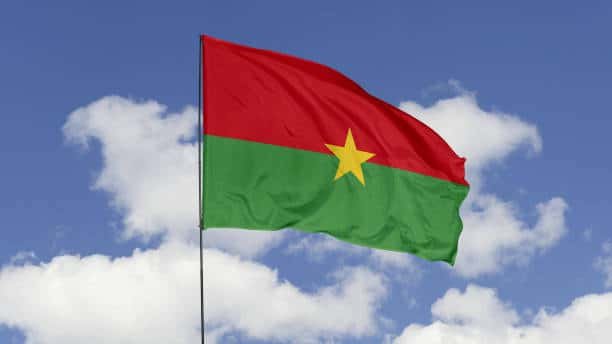
Burkina Faso, a landlocked country in West Africa, carries a deep and complex history shaped by ancient kingdoms, vibrant cultural traditions, colonial transformations, and post-independence political challenges. Formerly known as Upper Volta under French rule, the nation adopted the name Burkina Faso in 1984, meaning “Land of the Upright People.” This powerful identity reflects the resilience, courage, and unity of its citizens. Understanding Burkina Faso’s history offers insight into its cultural depth, political journey, and the remarkable spirit of its people.
—
Early Human Settlements and Ancient Kingdoms
Archaeological evidence reveals that Burkina Faso has been inhabited since prehistoric times. Stone tools, pottery, and ancient artifacts found across the region indicate continuous settlements dating back thousands of years. As societies advanced, agriculture, metallurgy, and trade networks began to shape powerful communities.
Between the 11th and 15th centuries, the region saw the rise of influential kingdoms dominated by the Mossi people, who remain the largest ethnic group in Burkina Faso today. These Mossi kingdoms—Ouagadougou, Yatenga, and Tenkodogo—were well-organized states ruled by emperors known as Mogho Naba.
The Mossi were known for their strong cavalry, administrative systems, and strategic diplomacy. Despite repeated attempts by powerful West African empires such as the Mali Empire and the Songhai Empire, the Mossi kingdoms remained independent for centuries. Their influence shaped the region culturally, socially, and politically, laying the foundation for the nation’s modern identity.
—
Islamic Influence and Trade Networks
Though the Mossi kingdoms maintained traditional beliefs, the spread of Islam through trans-Saharan trade routes began influencing the region from the 14th century onward. Muslim scholars and traders introduced literacy, new economic practices, and cultural exchanges, especially in northern regions.
However, unlike many West African societies, the Mossi did not fully convert to Islam until much later, resulting in a unique coexistence of traditional spirituality and Islamic customs—something Burkina Faso still reflects today.
—
European Contact and French Colonial Rule
European presence in the region began intensifying during the late 19th century, driven by the “Scramble for Africa.” France gradually established control through military campaigns and treaties with Mossi rulers. By 1896, the powerful Mossi Kingdom of Ouagadougou fell under French influence, marking the beginning of colonial domination.
In 1919, the French officially named the territory French Upper Volta. However, due to administrative reorganization, France dissolved Upper Volta in 1932 and split its territories among neighboring colonies. It was restored again in 1947 after local resistance and demands for political recognition.
Colonial rule disrupted traditional systems, introduced forced labor, taxed local populations, and reorganized the economy to benefit French industries. Yet, the period also saw the rise of schools, new administrative systems, and political awareness that later fueled the independence movement.
—
Road to Independence
The post-World War II period brought political awakening across Africa, and Upper Volta was no exception. The rise of political parties, participation in the French National Assembly, and demands for autonomy gathered momentum.On August 5, 1960, Upper Volta finally achieved full independence from France. Maurice Yaméogo became the country’s first president, although his administration soon faced criticism for authoritarianism and economic issues.
—
Post-Independence Political Shifts
Burkina Faso’s early post-independence decades were marked by political instability. A series of coups shaped the country’s leadership:
• 1966: The military ousted Yaméogo due to widespread protests.
• 1970s–1980s: Power shifted between military and civilian governments, reflecting political struggles, economic hardships, and public unrest.
However, the most significant turning point came in the early 1980s.
—
Thomas Sankara and the Rise of a New Identity
In 1983, Thomas Sankara, a charismatic military captain, became president through a popular coup supported by young revolutionaries. Sankara launched one of Africa’s most ambitious social and political transformation programs.
His policies included:
• Land reforms for farmers
• Nationwide literacy and vaccination campaigns
• Promotion of women’s rights
• Anti-corruption policies
• Economic self-dependence
•✓Reduced reliance on foreign aid
Sankara also renamed the country Burkina Faso in 1984. The name combined two local languages—Mooré and Dioula—to symbolize unity and integrity :
• “Burkina” (upright)
• “Faso” (fatherland)
His revolutionary movement earned global admiration but also generated domestic friction. In 1987, Sankara was assassinated in a coup led by his close associate Blaise Compaoré, marking another significant shift.
—
Compaoré Era and Political Transition
Blaise Compaoré ruled Burkina Faso for 27 years. His governance focused on political stability, regional diplomacy, and economic reforms. However, accusations of corruption, authoritarianism, and inequality grew over the years.
In 2014, public protests erupted when he attempted to extend his rule by changing the constitution. The movement forced Compaoré to resign, ending one of the longest presidencies in Africa.
—
Recent Political Developments
Following Compaoré’s departure, Burkina Faso entered a period of democratic transition but also faced rising security challenges due to extremist activities in the Sahel region. Military interventions, interim governments, and political turbulence have shaped recent years.
Despite these difficulties, the people of Burkina Faso continue striving for peace, stability, and democratic governance.
—
Cultural Identity and National Spirit
Throughout its history, Burkina Faso has developed a vibrant cultural identity. It is known for:
• Rich traditional music and dance
• Skilled craftsmanship, especially bronze and woodwork
• African cinema—hosting the famous FESPACO film festival
• Nomadic traditions mixed with modern values
• Deep community-oriented social structures
The name “Land of the Upright People” symbolizes the pride, dignity, and resilience at the heart of Burkinabe culture.
—
Conclusion
The history of Burkina Faso is a powerful tale of ancient kingdoms, colonial struggles, revolutionary dreams, and modern political challenges. From the Mossi Empire to the activism of Thomas Sankara and ongoing efforts toward national unity, Burkina Faso’s journey highlights the determination and spirit of its people.
Despite facing obstacles, the nation continues to evolve, guided by a rich cultural heritage and a desire to build a stable and prosperous future.