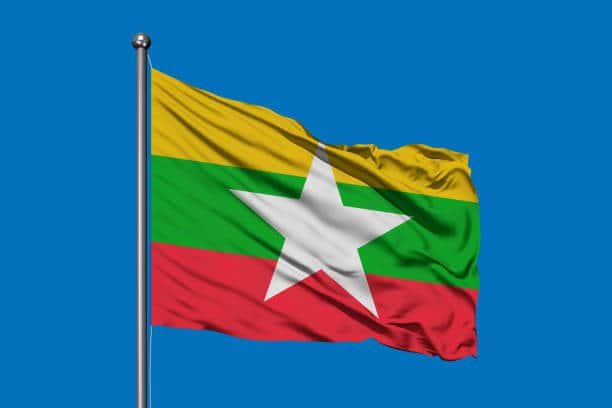
Myanmar, formerly known as Burma, is a Southeast Asian nation with a long, rich, and complex history shaped by ancient kingdoms, colonial rule, and modern political transitions. From the rise of early civilizations along the Irrawaddy River to its struggle for independence and current reforms, the history of Burma reflects cultural diversity, resilience, and transformation.
—
Early Civilizations and the Birth of Burmese Culture
The earliest known settlements in Burma date back thousands of years. Archeological findings from the Pyu city-states—such as Beikthano, Halin, and Sri Ksetra—reveal that Burma was home to highly organized societies by the 1st century CE. These Pyu people practiced Buddhism, built fortified cities, and maintained trade relations with India and China.
By the 9th century, waves of Tibeto-Burman migrants entered the central plains of Burma. Among them were the Bamar people, who founded their first major political center: Pagan (Bagan).
—
The Pagan Empire (849–1287): The Golden Age of Burmese Civilization
The rise of the Pagan Empire marked the true beginning of Burmese cultural identity. King Anawrahta, who reigned in the 11th century, united various ethnic groups and spread Theravada Buddhism throughout the region.
Key achievements of the Pagan Empire:
• Construction of over 10,000 temples and stupas, many of which still stand in Bagan.
• Establishment of Burmese language and script.
• Expansion of irrigation systems that supported agriculture.
• Flourishing of art, literature, and religious scholarship.
The empire declined in the late 13th century when it fell to repeated Mongol invasions under Kublai Khan. After Pagan’s fall, Burma entered a period of fragmentation.
—
The Era of Small Kingdoms (1297–1531)
Following the collapse of Pagan, Burma broke into smaller competing kingdoms:
• Ava Kingdom (Upper Burma)
• Hanthawaddy Kingdom (Lower Burma, dominated by the Mon people)
• Arakan Kingdom (Rakhine coast)
• Shan States ruled by Shan chieftains
This period was marked by constant warfare, cultural exchanges, and shifting alliances. Despite political instability, Burmese literature, music, and religious traditions continued to flourish.
—
The Taungoo Dynasty (1531–1752): Reunification and Expansion
The Taungoo Dynasty reunited most of Burma under King Tabinshwehti and his successor Bayinnaung, one of Southeast Asia’s most powerful rulers.
Bayinnaung’s achievements included:
• Expanding Burma’s territory to include parts of Thailand, Laos, and Assam.
• Establishing a tribute system across mainland Southeast Asia.
• Promoting administrative reforms and standardized laws.
However, after Bayinnaung’s death, the empire began to shrink due to revolts and external wars. By the mid-18th century, Taungoo power had faded, paving the way for a new dynasty.
—
The Konbaung Dynasty (1752–1885): The Last Burmese Kingdom
The Konbaung rulers restored Burmese power and rebuilt the kingdom’s prestige. Kings like Alaungpaya, Bodawpaya, and Mindon Min expanded the kingdom and modernized its institutions.
However, their expansionist policies brought the Konbaung Dynasty into direct conflict with the British Empire, which had already taken control of India.
—
LBritish Conquest and Colonial Period (1824–1948)
Burma fought three wars against the British:
First Anglo-Burmese War (1824–1826)
• Burma lost Assam, Manipur, and parts of Arakan and Tenasserim.
Second Anglo-Burmese War (1852)
• Burma lost Lower Burma, including the vital port city of Yangon.
Third Anglo-Burmese War (1885)
• The British dethroned King Thibaw, ending the Konbaung Dynasty.
• Burma became a province of British India.
Life under British rule
• Expansion of rice cultivation for export.
• Immigration of Indian laborers, reshaping demographics.
• Development of roads, railways, and ports.
• Rise of nationalist movements, including student and monk-led protests.
•Colonization brought modernization but also deep social and political tensions.
—
Struggle for Independence
In the early 20th century, Burmese nationalism grew rapidly. Key leaders emerged:
• General Aung San
• U Nu
• Aung San Suu Kyi’s father
During World War II, Burma became a major battleground between Japan and the Allied forces. Aung San first cooperated with Japan but later switched to the Allies when Japanese intentions became clear.
Aung San negotiated with the British for Burma’s independence, but he was assassinated in 1947. Despite this tragedy, Burma gained independence on 4 January 1948.
—
Post-Independence Era (1948–1962)
After independence, Burma faced:
• Ethnic insurgencies.
• Internal political disagreements.
• Economic instability.
U Nu became the first Prime Minister and attempted democratic governance, but the challenges proved overwhelming.
—
Military Rule and the Socialist Period (1962–2010)
In 1962, General Ne Win led a coup and established a military regime.
Ne Win’s socialist policies led to:
• Nationalization of industries.
• Economic isolation.
• Decline in living standards.
• Restrictions on freedom.
The situation worsened over decades, leading to the 1988 nationwide uprising. Thousands were killed, and the military rebranded itself as the State Law and Order Restoration Council (SLORC).
Democratic leader Aung San Suu Kyi rose to prominence during this time, winning the 1990 election, which the military refused to honor.
—
Transition Toward Democracy (2010–2020)
Under international pressure, Myanmar began political reforms:
• Release of political prisoners.
• Elections held in 2015, with massive victories for the National League for Democracy (NLD).
• conomic liberalization and increased global engagement.
—
Recent Political Crisis (2021–Present)
On 1 February 2021, the military seized power again, alleging election fraud. This triggered:
• Mass protests.
• Civil disobedience.
• International condemnation.
• Renewed conflict in multiple regions.
Myanmar today remains in a complex political and humanitarian situation.
—
Conclusion
The history of Burma is a tapestry of ancient kingdoms, colonial struggles, cultural achievements, and political challenges. From the grandeur of the Pagan temples to the modern fight for democracy, Myanmar’s story is one of resilience and transformation. Understanding this history helps us appreciate the country’s rich heritage and the aspirations of its people for peace and progress.