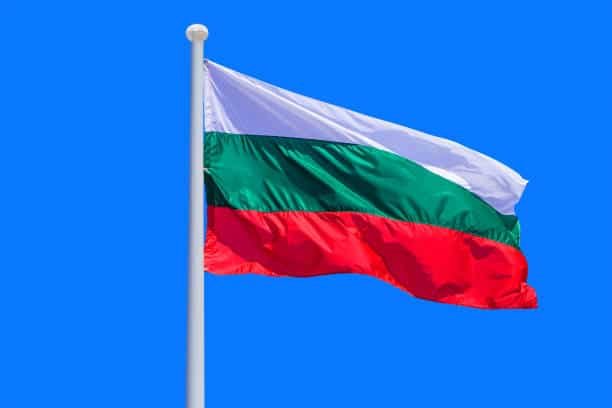
Bulgaria, located in Southeast Europe on the Balkan Peninsula, is one of the oldest countries on the continent, with a continuous statehood that dates back more than 13 centuries. Its history is shaped by Thracian culture, Slavic traditions, Bulgarian empires, centuries of Ottoman rule, and a powerful national revival that eventually formed the modern Republic of Bulgaria. The nation’s journey is filled with dramatic transformations, cultural achievements, and political changes that have influenced the broader history of Europe.
—
Early History: The Thracian Civilization
The earliest known inhabitants of the region were the Thracians, an ancient Indo-European people who lived in the territory of modern Bulgaria around 4,000 years ago. They built fortified settlements, practiced agriculture, and developed rich traditions in metalwork and art. Archeological discoveries such as the Thracian Tomb of Kazanlak and Thracian gold treasures reveal their advanced craftsmanship.
Thracians were also known for their connection to legendary figures like Spartacus, the famous gladiator who led a major slave rebellion in Rome. Over time, Thracian tribes came under the influence of the Greeks and later became part of the Roman Empire in the 1st century AD. Roman rule brought roads, cities, and economic development, strengthening urban life in the region.
—
Arrival of Slavs and Bulgars
Between the 5th and 7th centuries, Slavic tribes migrated to the Balkan region. Around the same period, a Turkic-speaking group called the Bulgars, led by Khan Asparuh, crossed the Danube River. In 681 AD, Asparuh founded the First Bulgarian Empire, which is considered the official beginning of the Bulgarian state. This date is one of the most important milestones in Bulgarian history.
The Bulgars united with Slavs and Thracians, creating a strong and stable kingdom. Over time, the Bulgars adopted Slavic language and culture, forming the foundation of the Bulgarian ethnic identity.
—
The First Bulgarian Empire (681–1018)
The First Bulgarian Empire quickly rose to power. Under rulers like Khan Krum, Bulgaria expanded its territory and became a major European political force. Krum is famous for defeating the Byzantine Emperor Nikephoros and creating a legal code that strengthened the nation.
A turning point in Bulgarian history came under Tsar Boris I, who accepted Christianity in 864 AD. This conversion unified the population and aligned Bulgaria with the Christian world. Soon after, the disciples of Saints Cyril and Methodius introduced the Glagolitic and later Cyrillic alphabet, allowing Bulgarians to develop their own literature and religious texts.
The empire reached its cultural and territorial peak under Tsar Simeon the Great (893–927). This era, known as the Golden Age of Bulgarian Culture, produced literature, art, and architecture that deeply influenced Slavic nations.
However, internal conflicts and pressure from the Byzantine Empire weakened Bulgaria. In 1018, after a long struggle, Bulgaria was conquered by Byzantium.
—
The Second Bulgarian Empire (1185–1396)
After more than a century of Byzantine rule, Bulgarians regained independence in 1185 under the leadership of Asen and Peter, establishing the Second Bulgarian Empire. This period marked another era of revival in culture and military strength.
Under Tsar Kaloyan and later Tsar Ivan Asen II, Bulgaria became one of the most powerful states in Southeast Europe. The empire expanded its borders, improved trade, and developed new architectural styles, including beautiful monasteries and churches.
However, from the 14th century, the empire faced internal divisions and external threats, especially from the rising Ottoman Empire. By 1396, Bulgaria fell to the Ottomans, beginning nearly five centuries of foreign rule.
—
Ottoman Rule (1396–1878)
Ottoman domination was a long and challenging period in Bulgarian history. Although many aspects of Bulgarian culture were suppressed, the spirit of national identity survived through:
• The Orthodox Church
• Local communities and traditions
• Monasteries and education
During this time, Bulgaria saw the development of cultural and literary preservation movements. The 18th and 19th centuries witnessed a strong Bulgarian National Revival, which focused on restoring Bulgarian language, education, and culture.
Leaders like Paisius of Hilendar, Vasil Levski, and Hristo Botev played key roles in inspiring a revolutionary spirit among Bulgarians.
—
Liberation and the Third Bulgarian State (1878–1946)
The struggle for liberation reached its peak during the April Uprising of 1876, which, although suppressed, drew international attention. Following the Russo-Turkish War (1877–1878), Bulgaria was liberated by the Treaty of San Stefano, later revised by the Treaty of Berlin.
This led to the creation of the Principality of Bulgaria and the autonomous region of Eastern Rumelia, which united in 1885. In 1908, Bulgaria declared full independence and became the Kingdom of Bulgaria.
During the 20th century, Bulgaria participated in the Balkan Wars, World War I, and World War II, which had mixed outcomes and territorial changes.
—
Socialist Era (1946–1989)
After World War II, Bulgaria became a People’s Republic under communist rule backed by the Soviet Union. This era was marked by:
• Industrialization
• Agricultural collectivization
• Improved literacy and education
• But also political repression and limited freedoms
The communist government lasted until 1989, when democratic movements swept across Eastern Europe.
—
Modern Democratic Bulgaria (1990–Present)
Since 1990, Bulgaria has transformed into a democratic nation with a free-market economy. Major milestones include:
• Joining NATO in 2004
• Becoming a member of the European Union in 2007
Today, Bulgaria is known for its rich cultural heritage, natural beauty, and growing tourism sector. The nation continues to develop economically while preserving its deep historical roots.
—
Conclusion
The history of Bulgaria is a remarkable journey of resilience, cultural achievement, and transformation. From the ancient Thracians to powerful medieval empires, from centuries of Ottoman rule to modern European integration, Bulgaria has preserved its identity while adapting to changing times. Its historical legacy continues to influence the Balkans and enrich world culture.