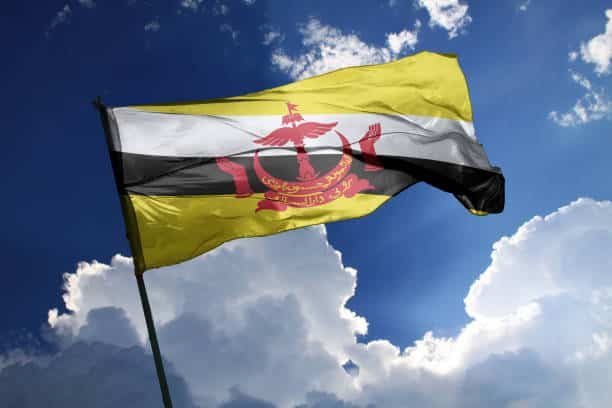
Brunei, officially known as Brunei Darussalam (meaning “Abode of Peace”), is a small yet historically rich nation located on the northern coast of Borneo in Southeast Asia. Despite its size, Brunei has a deep and fascinating history shaped by ancient kingdoms, maritime trade, Islamic influence, colonial encounters, and modern economic transformation driven by oil and gas. In this detailed blog, we explore the complete history of Brunei, from its early beginnings to its rise as one of the richest nations in Asia.
—
Early Beginnings: The Roots of Brunei
The earliest evidence of civilization in Brunei dates back to the 7th–8th centuries, during the time when several local chieftainships and settlements thrived along the Brunei River. These early communities were heavily involved in trade with China, exchanging forest produce, camphor, spices, beeswax, and rare woods.
By the 9th century, Chinese historical records mention a kingdom called Boni, believed to be ancient Brunei. This kingdom maintained regular trade with the Tang and Song dynasties, showing the region’s early strategic importance in the maritime silk route.
—
The Rise of the Bruneian Empire (14th–16th Century)
Brunei reached its golden age during the Bruneian Empire, which flourished between the 14th and 16th centuries. Under the rule of powerful sultans, the empire expanded its influence over large parts of Borneo, including present-day Sarawak, Sabah, and several coastal areas of Philippines such as Sulu, Manila, and Mindanao.
Conversion to Islam
A major turning point was the arrival of Muslim traders from Arabia and India. Around 1369–1400, Sultan Muhammad Shah became the first ruler to embrace Islam, marking the foundation of the Islamic Sultanate of Brunei.
Islam not only transformed Brunei’s religion but also influenced its laws, culture, governance, and international alliances. The sultanate soon became one of the most powerful Islamic kingdoms in Southeast Asia.
Sultan Bolkiah: The Warrior Prince
One of Brunei’s most legendary rulers, Sultan Bolkiah (1485–1524), expanded the empire’s dominance across Borneo and into the Philippines. His leadership turned Brunei into a significant regional naval and trading superpower.
—
European Contact and the Decline of the Empire
The arrival of European colonizers in the region marked the beginning of Brunei’s decline.
Influence of the Portuguese and Spanish
In the early 16th century, the Portuguese established themselves in nearby Malacca, disrupting Brunei’s trading network. Soon after, the Spanish invaded Manila, challenging Bruneian control in the Philippines.
The intense conflict between Brunei and Spain led to the Castilian War in 1578, where the Spanish temporarily occupied the Brunei capital, Kota Batu. Although Brunei eventually regained control, the empire’s power was significantly weakened.
—
19th Century: Internal Struggles and Loss of Territory
During the 1800s, Brunei faced:
Internal conflicts
Succession disputes
Growing British influence in Borneo
This period saw Brunei losing vast territories.
Rise of the White Rajahs in Sarawak
One of the most notable events was the emergence of James Brooke, an English adventurer who helped Brunei suppress a rebellion in Sarawak. As a reward, the Sultan granted him authority over the region. Brooke later became the Rajah of Sarawak, and his successors expanded their rule over more Bruneian lands.
British North Borneo Company
In the late 19th century, more Bruneian territories were ceded or leased to the British North Borneo Company, further shrinking the sultanate’s borders.
By 1888, facing increasing pressure from rival powers and internal instability, Brunei agreed to become a British Protected State. Britain controlled foreign affairs, but the Sultan retained authority over internal matters.
—
Early 20th Century: Discovery of Oil
A dramatic turning point came in 1929, when oil was discovered in Seria, Belait District. This discovery not only transformed Brunei’s economy but also ensured that Britain maintained strong strategic interest in the region.
Oil revenues improved:
Infrastructure
Education
Healthcare
Living standards
Brunei gradually moved toward modernization while still maintaining its Islamic monarchy.
—
World War II and Japanese Occupation
From 1941 to 1945, Brunei was occupied by Japanese forces during World War II. The invasion disrupted industries and caused hardship, but the British regained control after Japan’s defeat.
—
Path to Independence
Post-war, Brunei began taking steps toward self-governance:
1959 Constitution: Gave Brunei internal self-rule while Britain handled defense and foreign affairs.
1962: Brunei rejected joining the proposed Federation of Malaysia, preferring to retain its separate identity.
1971 Agreement: Granted Brunei full control over internal matters.
1984 Independence: On January 1, 1984, Brunei fully gained independence from Britain, becoming Brunei Darussalam.
—
Modern Brunei: A Wealthy Islamic Monarchy
Today, Brunei is ruled by His Majesty Sultan Hassanal Bolkiah, one of the world’s longest-reigning monarchs. The country is known for:
High per capita income
Free healthcare and education
Stability and low crime
Strong Islamic heritage
Large reserves of oil and natural gas
Brunei maintains a peaceful international presence and focuses heavily on social welfare, Islamic values, and economic diversification.
—
Conclusion
Brunei’s history is a remarkable journey—from a powerful maritime empire to a shrinking sultanate under colonial pressure, and finally, to a wealthy modern nation-state grounded in Islamic traditions. Its resilience, strategic trade history, and natural resources have shaped Brunei into one of the most prosperous and stable countries in Southeast Asia.